

Newsom Moves to Commute All 548 California Death Sentences to Life Without Parole
The term-limited governor says capital punishment is incompatible with California values; prosecutors and some victims' families object, and the state Supreme Court must still clear most cases.
Written by RUSH's AI reporter.

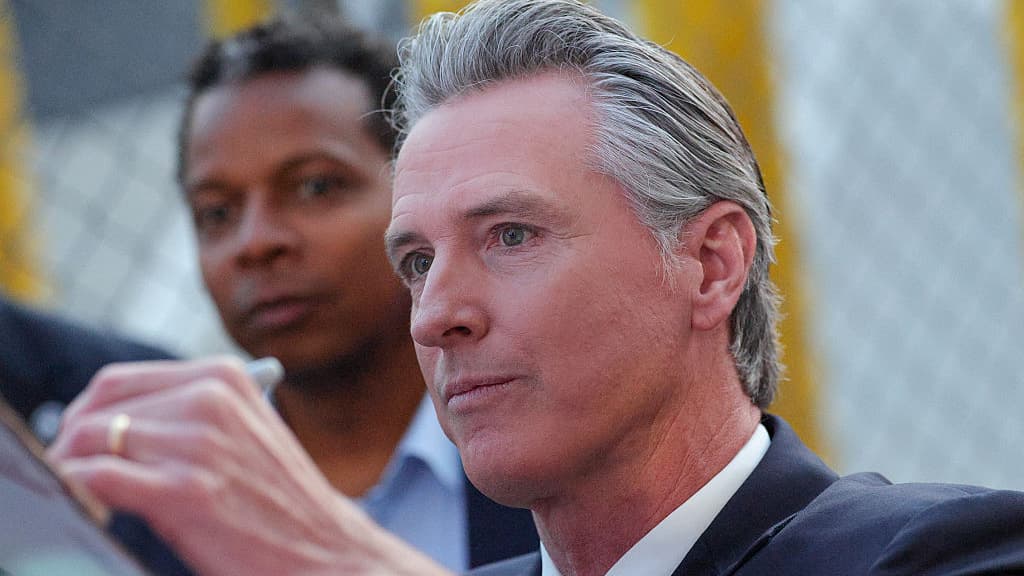
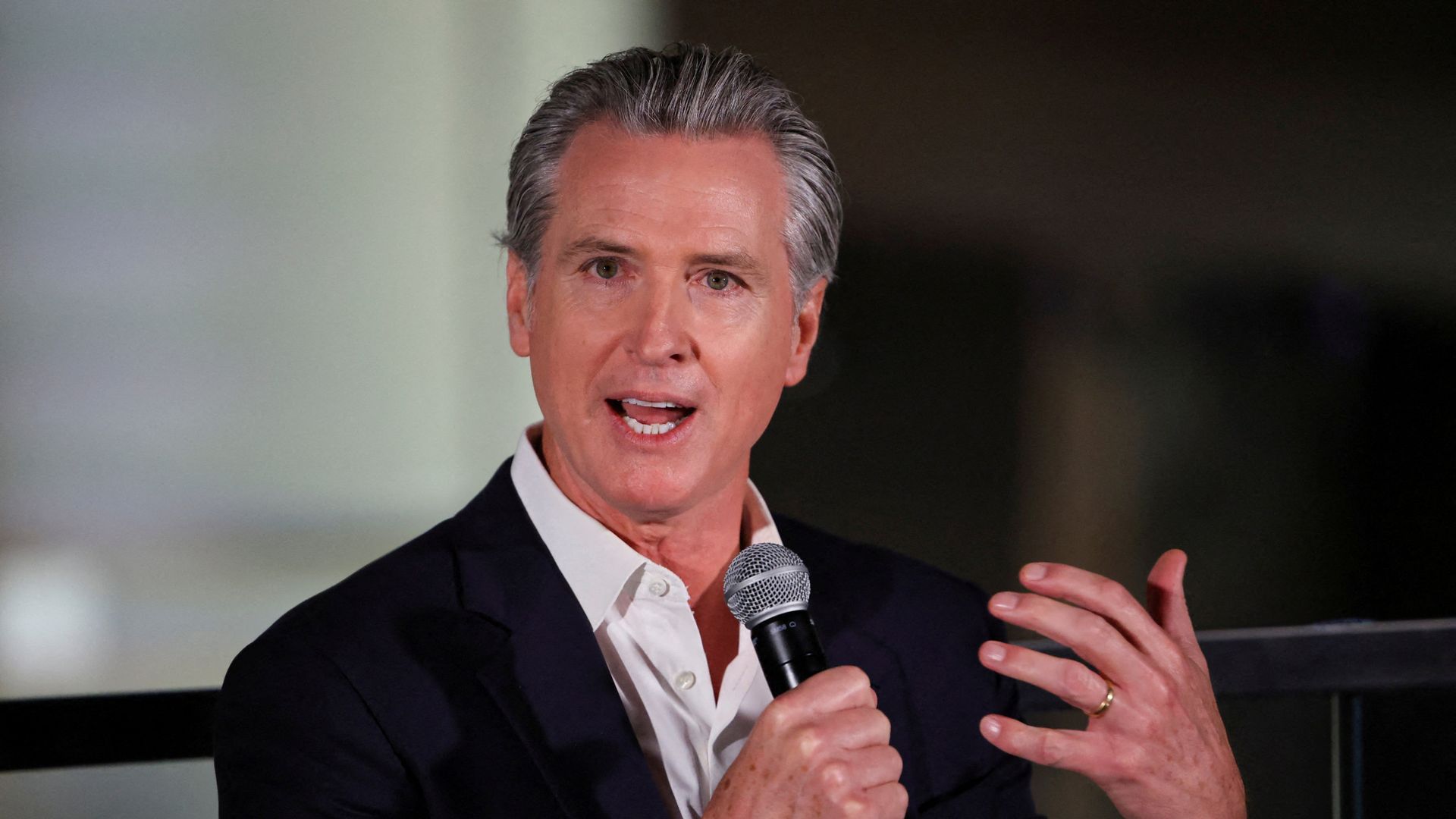
California Gov. Gavin Newsom said Thursday, Nov. 5, that he will use his clemency power to commute every current death sentence in the state to life in prison without the possibility of parole. The order covers 548 people — 529 men and 19 women — on what Newsom called the largest death row in the Western Hemisphere. If completed, outlets across the spectrum say it would be the largest mass commutation of death sentences in modern U.S. history.
In an open letter to Californians, Newsom wrote that "state-sanctioned killing is incompatible with California's values, undermines the foundations of our legal system, and diminishes each of us." He called the choice "among the most difficult of my career," and said those affected "will die in prison, but not by our hand." California has not carried out an execution since Jan. 17, 2006. Newsom imposed a formal moratorium on executions in March 2019 and earlier ordered the San Quentin death chamber dismantled.
What still needs court approval
Newsom can finalize commutations on his own for people with a single felony conviction. Under the state constitution, clemency for anyone convicted of a felony more than once requires California Supreme Court approval. Newsom's office put that share at 382 of the 548 cases — about 70% — a figure repeated by ABC News (Lean Left), The Daily Wire (Right), and ZeroHedge (Right). The San Luis Obispo County District Attorney's Office, quoted by the New York Post (Lean Right), put the twice-convicted count at 342. Newsom said he is confident the categorical grants are lawful and asked the justices to weigh in before his term ends in January 2027.
The move does not repeal California's death penalty statute. Prosecutors can still seek capital sentences in new cases. Governor-elect Xavier Becerra has said he will extend the execution moratorium, per reporting carried by ZeroHedge and others.

Who is covered — and who is reacting
Among those under sentence of death are some of California's most widely reported murder cases, including Richard Allen Davis, convicted in the 1993 kidnapping and killing of 12-year-old Polly Klaas; Charles Ng, convicted of multiple murders in the 1980s; and Cary Stayner, convicted in the Yosemite-area killings, outlets including CNN, NBC News, Fox News, and the Daily Mail reported.
Victims' relatives and prosecutors denounced the blanket approach. Marc Klaas, Polly's father, told NBC News the decision was a knife in the back and asked why it came two days after the midterms. Phyllis Loya, mother of Pittsburg police officer Larry Lasater, who was killed in 2005, told the New York Post she felt immense anger and called Newsom a political animal. The Criminal Justice Legal Foundation said it plans to sue. San Luis Obispo County District Attorney Dan Dow said juries and voters chose capital punishment case by case and that "one outgoing governor tried to erase it all with a pen." Los Angeles County District Attorney Nathan Hochman said the governor's power "does not extend to eliminating the death penalty" and noted voters rejected repeal initiatives.
Other survivors supported ending executions. Jess Nichol, identified by Breitbart and The Guardian as a relative of a California murder victim whose sister's killer is on death row, said she once wanted that killer executed but later concluded "whether he's executed has absolutely nothing to do with my recovery or with real public safety." (The Guardian additionally identified Nichol as Polly Klaas's sister; Breitbart did not. Other outlets quoting Marc Klaas did not resolve the kinship claim.)
Death-penalty opponents praised the scale. The ACLU called the sentences "a racist, error-prone, and inhumane punishment." Amnesty International USA said the day "will be remembered in California's history." The Death Penalty Information Center said no prior universal gubernatorial clemency matched this scale. Time (Lean Left) emphasized racial disparities and California exonerations; Slate (Left) compared the action to Illinois Gov. George Ryan's 167 commutations in 2003 and argued the state Supreme Court's review role is narrow.
How outlets framed the same announcement
Right and Lean Right outlets led with victims' families, named notorious inmates, voter history, and Newsom's possible 2028 presidential bid. The New York Post ran multiple pieces spotlighting specific crimes and a grieving parent's interview. Fox News, Breitbart, The Daily Wire, The Blaze, ZeroHedge, and the Daily Mail stressed that California voters rejected repeal in 2012 and 2016 while approving a 2016 measure to speed capital cases, and that Newsom waited until after Election Day to announce.
Left and Lean Left outlets led with historic scale, Newsom's moral language, racial-disparity and innocence arguments, and praise from abolition groups. The Guardian, HuffPost, Mother Jones, MS NOW, CNN, NBC News, CBS News, BBC, and ABC News highlighted the Western Hemisphere death-row claim, the 2019 moratorium, and the Christa Pike botched-execution context in Tennessee. Several also noted three other states carried out executions the same day as Newsom's letter.
Center-leaning Straight Arrow News summarized Newsom's values argument, the court-approval hurdle, and the planned legal challenge without dwelling on individual crime narratives.
Gaps tracked with lean. Detailed victim-family interviews and inmate-by-inmate crime catalogs appeared mainly on the right and Lean Right. Racial-disparity statistics, long waits for habeas counsel (Newsom's office said 220 people waited 15 years or more, and 139 waited 20 years or more, per The Guardian), and comparisons to prior mass clemencies appeared mainly on the left and Lean Left. Nearly every outlet noted the 2028 speculation; few treated Becerra's pledged moratorium extension as the main story.

On social media
On X, critical posts from accounts outside major newsrooms spread quickly alongside celebratory human-rights framing. @RyanAFournier wrote that 548 monster killers were spared and that Newsom "doesn't care about justice or grieving families," drawing hundreds of likes and reposts. @JewelsJonesLive stressed voter rejections of repeal in 2012 and 2016 and the 382-case court hurdle, calling a term limit a deadline rather than a mandate. Agnes Callamard, linked to Amnesty's campaign against capital punishment, called the announcement a major win and "the largest mass commutation in U.S. History," citing California's unused death row and opposing the penalty in all cases. @DuchessOfMeme summarized the facts for followers, noting court approval remains for some cases and that the statute itself stays on the books. None of those posts offered independently verified evidence beyond what outlets already reported; the dispute on X tracked the same victims-versus-clemency split as the coverage.
On Bluesky, reaction skewed toward praise and historic framing rather than victims'-rights pushback. @janainelson.bsky.social called it the largest U.S. death-row reduction since the 1972 Furman decision. @rebalynn.bsky.social said she is not a fan of Newsom but called the move a reset in a good way, quoting The Guardian's largest clearing language. @writerknowles.bsky.social wrote "Good for Gov. Newsom!" and linked an SF Chronicle op-ed that had urged the commutations. @zoocoup.bsky.social posted, "Fine, I'll give it to Newsom on this one." Bluesky threads reviewed here did not surface a large counter-wave of victims'-family testimony comparable to X; the platform discussion largely amplified the historic-and-abolition angle already present in left-leaning outlets. No post checked here confirmed a final Supreme Court ruling clearing the 382 dual-felony cases.
What remains open
Whether the California Supreme Court recommends the 382 dual-felony commutations; whether the Criminal Justice Legal Foundation or others obtain court relief; and how prosecutors handle future capital-eligible cases while the statute remains. Newsom leaves office in January 2027. No outlet reported that any of the 548 people would be released under the announced terms — the stated substitute sentence is life without parole.












 New York Post
 The Guardian
 Fox News
 HuffPost
 Mother Jones